
See a list of all the winners here.
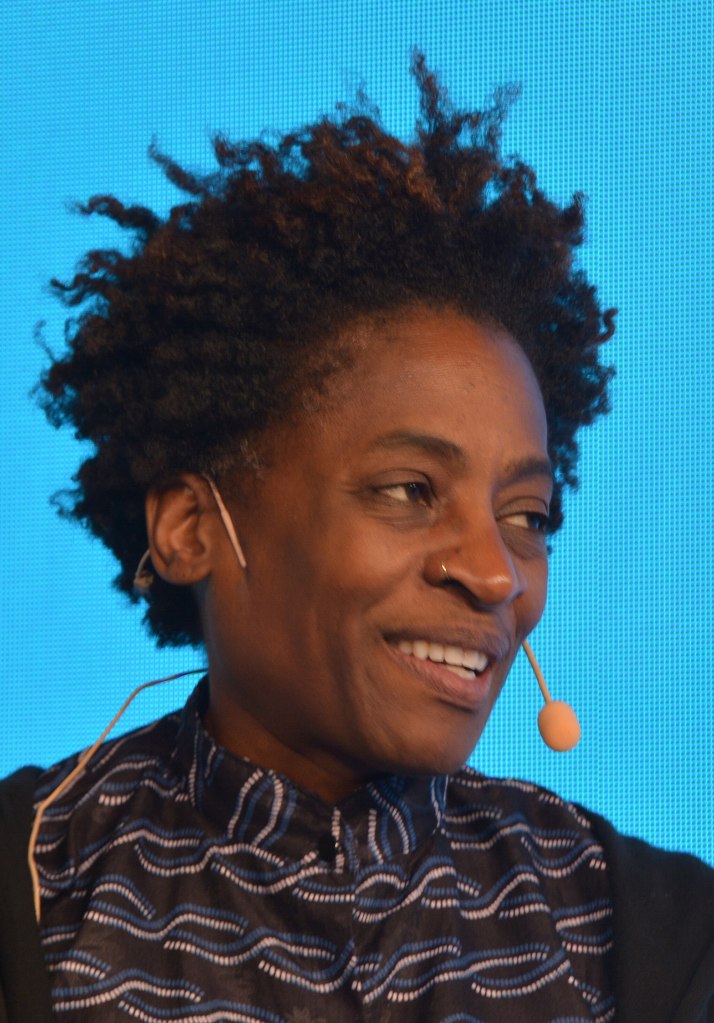
Who is Jacqueline Woodson?
Jacqueline Woodson is an American writer of books for adults, children, and adolescents. She is best known for her National Book Award-Winning memoir Brown Girl Dreaming, and her Newbery Honor-winning titles After Tupac and D Foster, Feathers, and Show Way. Her picture books The Day You Begin and The Year We Learned to Fly were NY Times Bestsellers. After serving as the Young People’s Poet Laureate from 2015 to 2017, she was named the National Ambassador for Young People’s Literature by the Library of Congress for 2018–19.
On Jacqueline’s author website, she writes:
“I am still surprised when I walk into a bookstore and see my name on a book or when the phone rings and someone on the other end is telling me I’ve just won an award. Sometimes, when I’m sitting at my desk for long hours and nothing’s coming to me, I remember my fifth-grade teacher, the way her eyes lit up when she said “This is really good.” The way, I — the skinny girl in the back of the classroom who was always getting into trouble for talking or missed homework assignments — sat up a little straighter, folded my hands on the desks, smiled, and began to believe in me.”
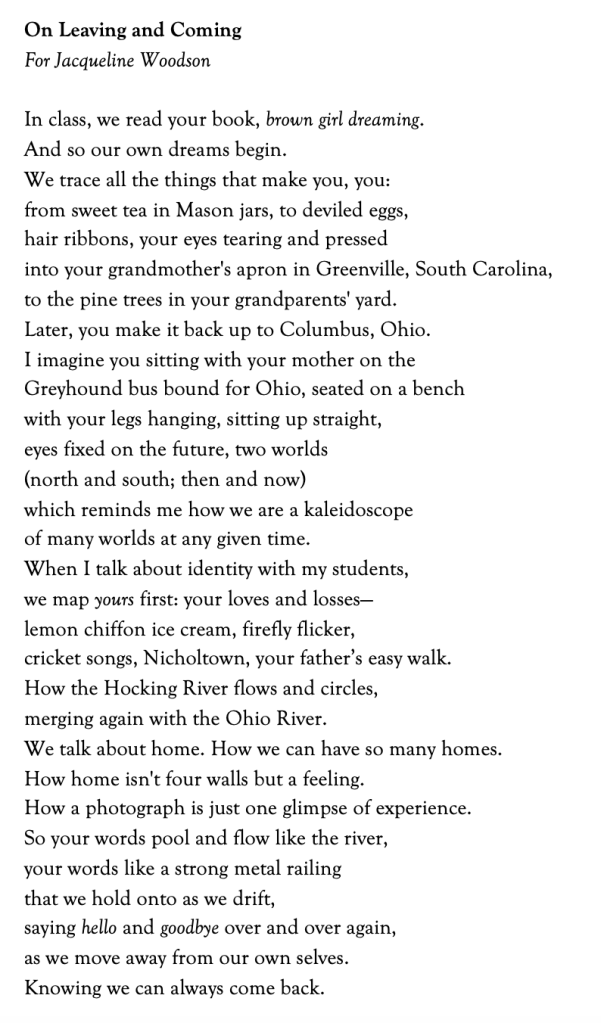
Esther Sadoff on Her Poem
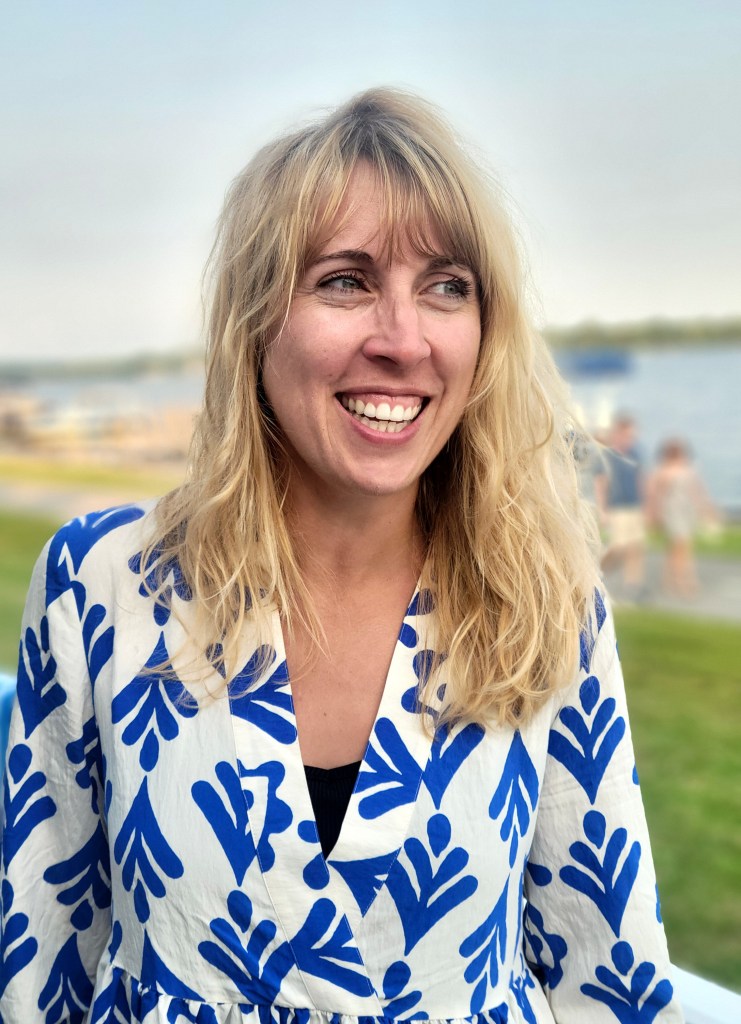
My poem is inspired by Jacqueline Woodson and her verse memoir, Brown Girl Dreaming. Though Woodson was born in Columbus, Ohio, she spent much of her early childhood in Greenville, South Carolina, living with her maternal grandparents. Her memoir captures the many moments of change that upend her life: leaving Ohio behind, moving to the south, learning to read, discovering the meaning of home, and finding her own voice.
It is a novel about becoming: about living with the ghosts of the past while forging a unique future. What is surprising about Jacqueline Woodson is that despite her many literary awards and distinctions, her path to becoming a writer wasn’t easy. As a child, she struggled with reading. Today, she advocates for the power of slow reading: taking the time to soak in the power of stories.
What inspires me most about Brown Girl Dreaming is how vast and sprawling the novel feels: how it allows readers (my middle school English students included) to become a part of that story as they ask themselves what they are dreaming of. Woven through this poetic saga are haikus about how to listen, how to speak up, and how to harness the voice within each of us. That voice that is shaped by memory, by family, by love, by labor, and by the power of storytelling.
Esther’s Instagram: @esther_elizabeth1
 Women of Ohio
Leave a comment